by Ashley Bingham | Feb 20, 2019 | News Slider
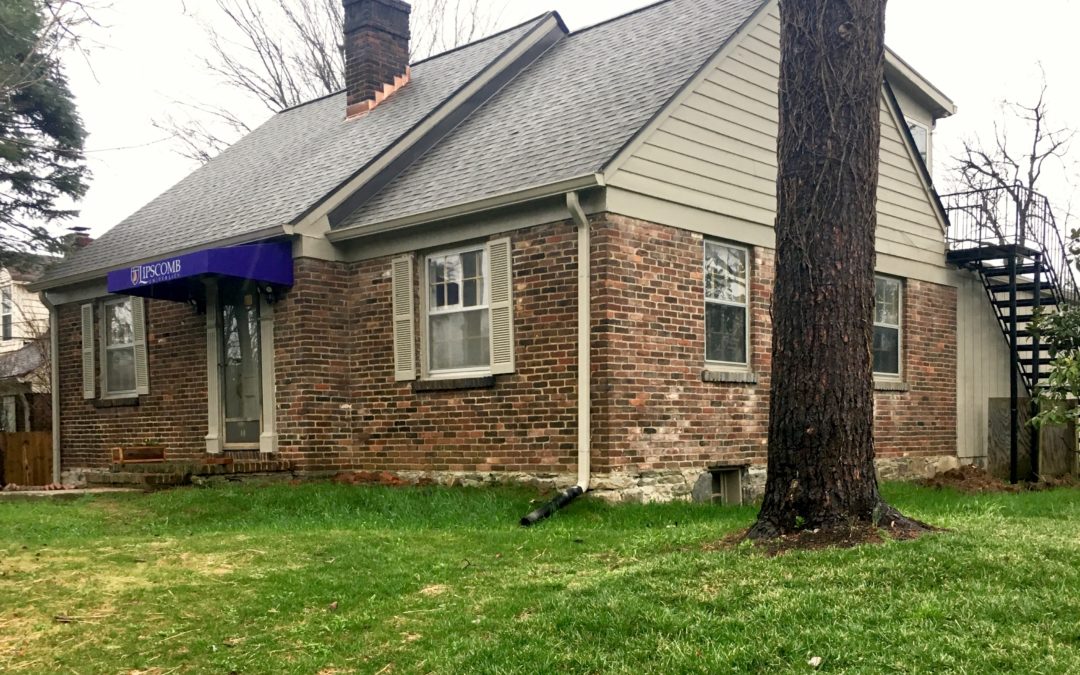
The Honors College has officially moved on from the basement of Elam and into a new home. A house on campus that was once used as a place for storage has been redone as a relaxing study environment for Lipscomb’s honor students. Director Paul Prill said the Honors program has been in need of more space as more students joined, as it currently has 600 students enrolled. “We finally got a space where we can do things, so now we’re going to try and actually do some of those things,” Prill said. Prill added that he wanted this to be a space for honors students to come and study or hang out. There are plenty of rooms, both upstairs and downstairs, where students can relax or study for their upcoming exam. Prill also said he hopes to hold get-togethers for honors students and possibly sponsor certain events, giving students within the department an opportunity to get to know each other better. “I’m hoping that if we can have some activities here, then people will start to meet other people in different classes,” Prill said. He also noted that the freshman Lipscomb Experience classes will be meeting in the new building, so that freshman will know that the house is available to them. Prill said he hopes this will encourage them to come back throughout their time at Lipscomb. “Students will see this as their space from day one,” Prill said. To help the space feel more like their own, Prill said the Honors College has tried to be intentional about bringing in student-made art — and not just from...
by Quinn Gorte | Feb 19, 2019 | News Slider
Out of the seven Lipscomb students who were nominated for the Fulbright Scholar Program, all seven have gone on to become semi-finalists. In the past, the highest number of Lipscomb students to achieve Fulbright semi-finalist status in one year was one. This year, all seven nominated Lipscomb students or recent graduates were accepted as semi-finalists into Fulbright, which is a prestigious international exchange program sponsored by the U.S. Department of State’s Bureau of Educational and Cultural Affairs. Dr. Paul Prill, Lipscomb’s Fulbright program adviser and director of the Honors College, said this recognition was unusual for “a school like Lipscomb,” since most Fulbright Program finalists come from larger universities, like the University of Michigan and Cornell University. “This is unprecedented for Lipscomb,” Prill said. “It’s really good for Lipscomb to be able to point to the academic success the students are having.” One of the semi-finalists, Lipscomb senior Maribeth Beyer, shared her thoughts on what this means for her and Lipscomb. “We’re not Yale, Harvard [or] Vanderbilt, but we are moving up,” said Beyer, adding, “and any opportunity I have to take Lipscomb further than Nashville is an incredible opportunity for me.” According to Dr. Prill, Fulbright applicants have about a five percent chance of becoming a semi-finalist, and semi-finalists have approximately a 30 to 50 percent chance of becoming a finalist. Once accepted into the program, Fulbright scholars will have the opportunity to live in a country of their choosing, either as an English teaching assistant, a researcher or a student, for approximately one year, depending on the program and grant. Bigger countries, like Spain and Germany, often...
by Emily Snell | May 2, 2012 | News Slider
Lipscomb senior Bethany Eldridge was announced last week as a Fulbright U.S. Student grant recipient, allowing her to study global development in The Netherlands. The grant will send Eldridge, a soon-to-be graduate in law, justice and society, to the University of Maastricht in The Netherlands to obtain her master’s degree in European Studies on Society, Science and Technology. Eldridge said the first half of the one-year program is focused on background, study skills and techniques on how education and technology are used in global development, and the second half allows participants to do their own research. “It kind of means to me that all of my dreams and goals are happening, and there was a reason I’ve had this desire to do something larger than myself,” Eldridge said of what the award means to her. “Now I have the platform to do it. It kind of makes my life make sense now that things match up.” Eldridge said she hopes to use her Netherlands experience to learn how to better educate girls in developing nations. “I want to learn the practical steps in how you help the underserved girls in the world with education,” Eldridge said, “and how people have overcome [barriers] and what needs to be done still.” Paul Prill, director of the Honors College, serves as the faculty adviser for students interested in applying for the Fulbright program. He said the U.S. only awards 800 grants for undergraduate students, and he estimates that more than 15 thousand students apply each year. “She’s in the top one tenth of one percent of students in the country in terms of her intellectual ability...
by Julie Shrewsbury | Sep 22, 2010 | News Slider
When is the last time you invested in something important to you? At Lipscomb University, all employees are encouraged to give back to the school monetarily. By donating to the school, the faculty and staff provide academic excellence, spiritual formation and service to the university. This endeavor is called the Family Campaign. In order to reach the goal this year of increasing participation among staff, a steering committee was formed to aid in marketing the Family Campaign in hopes to reach or exceed the target. Dr. Paul Prill, professor in the department of communications and journalism and director of the Honors College, is the chair of the steering committee. Sonja Hayes, who works as the assistant director of annual giving and special campaigns, is on the steering committee along with co-chair Pam Eatherly, an employee in Beaman Library, Cynthia Smith, administrative assistant in the facilities department and Walt Leaver, vice president of university relations. “The steering committee helped us create this year’s campaign and gave several incentives and made numerous suggestions to the way we market the campaign,” Hayes said. “We had a goal of increasing participation this year and trying to educate faculty and staff on the purpose of the Lipscomb fund. “The fund provides unrestricted dollars to support academic and instructional support, institutional support and technology, physical campus enhancement and allots money for student services such as scholarships and campus life. We use the Lipscomb Fund to give money back to the students, and that is one of the messages we wanted to get out to faculty and staff this year. So we provided a lot of...
