by Hunter Patterson | Sep 1, 2011 | News Slider
Car bashing, free food and drinks and Greek letters will fill Bison Square tonight when Lipscomb’s social clubs start recruiting for the fall semester. Many freshmen have heard of these clubs, but they’re probably not aware of what exactly is going to happen. Who better to tell them than new ICC president Dale Binkley? “Rush fair is a great way for freshmen to get a feel for Lipscomb life outside of class,” Binkley says. “It’s a great opportunity for both freshmen and upperclassmen to branch out and make many new friends and memories that will last a lifetime.” Rush fair is not just there for clubs to promote themselves. It’s also so students can meet people they would never meet otherwise. Even though Lipscomb is a small school, there are still people you may never see because of dorm assignments, departments or class schedules. Phi Sigma’s president, Charli Shelby, agrees. “Rush fair is a good way for people to get involved on campus,” Shelby said. “They can meet a lot of upper classmen involved not only in social clubs but other clubs and organizations.” It’s not just being in the club that matters, though. For Shelby, Phi Sigma opened the door for many other opportunities, too. “For me, being a part of a club and Greek life in general opened the door for me to make friends that became some of my best friends in the world,” she said. “My freshmen year I became friends with seniors and juniors that I would have never known if not for Greek life.” Now a senior, Shelby says that she is excited about...
by Amy Roberts | Aug 31, 2011 | News Slider
The story of Timothy Hill’s life is a lasting example of a young man’s desire to serve. God worked in Timothy for the 13 years he lived on earth and his passion and story is best captured in the book by his mother, Fern Hill, called Graduation to Glory. Timothy told his parents he wanted someday to “build a place where homeless kids could live, be loved, feel safe and have wide open spaces to ride horses.” Timothy began working at age 12 to save money for the land where he could make his dream become a reality. On May 11, 1972, a tragic bicycle-truck accident ended Timothy’s life at the young age of 13. His mother, wanting a way to commemorate his life, wrote a book entitled, Graduation to Glory, which recounted his selfless years and his dream of opening a ranch for homeless children. His parents, Jerry and Fern Hill, adopted their son’s dream, and God has blessed the journey ever since. Timothy Hill Children’s ranch opened its doors for the first time on November 15, 1980. For years, THCR has been a safe haven for children during their desperate time of abuse, neglect and crisis. It’s a 70 acre, farm-style campus, located in Riverhead, New York. For more than 30 years the work done at THCR has made significant differences to more than 700 young men. The goal is to help them see the bigger picture than what is in front of them and that every person who comes to THCR to hear and believe that they are valuable. It also teaches that everyone has gifts...
by Amy Roberts | Aug 31, 2011 | News Slider
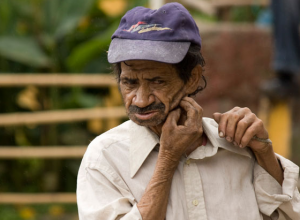
We all know what a torch is. We hear people talk about “the passing of the torch” or “carrying the torch,” but to many, TORCH is an acronym that stands for Training of Redeemed Christians Heavenbound. The TORCH program began in 1988 when Steve Davidson, formerly the director of spiritual outreach at Lipscomb, and Miguel Agular, of the Baxter Institute of Biblical Studies in Tegucigalpa, Honduras, realized a need to train young men and women to become full- and part-time missionaries. In early TORCH trips, 15-20 members would travel to Honduras every year. In 1995, TORCH added a second team. This past summer, there were 12 teams who worked in Costa Rica, Nicaragua and Honduras. Over 600 individuals shared the love of God and served those in need. Short-term mission trips have become an effective method of evangelism. Trips focus on specific areas, goals or needs. Lipscomb, as well as other Christian colleges and universities, offer short-term mission trips for students and others who can travel at specific times. Many youth ministers, campus ministers and churches also provide short-term mission opportunities. TORCH Missions place an emphasis on serving the impoverished and providing benevolent relief for those who suffer from the effects of poverty, disaster and insufficient medical care. In the past, TORCH teams have built over 2,000 houses in Honduras since 1995, 12 church buildings, school classrooms and feeding centers. They distribute food, clothing, hygiene supplies (toothbrushes, toothpaste, soap, shampoo, etc.), Bibles, Bible tracts, school supplies, toys and shoes. Teams also have built playgrounds at schools, orphanages, and day care centers. They visit those in hospitals, retirement homes, special...

by Emily Snell | Aug 31, 2011 | News Slider
Hurricane Irene struck the East Coast last weekend, leaving a long trail of destruction including at least 43 deaths and nearly $7 billion in damage. Days after the storm, it was estimated that almost 3 million people were still without power. Flooding remained a problem in many areas, while others have begun to clean up downed trees and other debris. Families of several Lipscomb students felt the force of Hurricane Irene. Ryan Whitley, a junior in business management from Rockland County, N.Y., said his family had some flood damage and was without power on and off for a few days. He said his relatives in New Jersey had a flood in their basement. “The whole thing was basically under water.” Whitley, whose family lives near the Hudson River, said he was relieved that the storm wasn’t worse. “I’m glad my family is safe,” he said. Other families in Whitley’s home area were not so blessed. One young boy was playing in some floodwater when a power line fell in the water, Whitley said. An adult attempted to save the boy but was killed by the high voltage. The child is still in critical condition. Whitley said he thought the storm “caught people off guard,” explaining that normally when hurricanes hit the Eastern Seaboard, his area only gets a little rain. Winter storms are usually what people in Whitley’s town prepare for, he said. “The worst we get is usually a blizzard, and we’re prepared for that,” he said. “It’s snow; it just get plowed. Something like water, you can’t do too much with.” Hannah Lavoie, a sophomore social work major...
by Cory Woodroof | Aug 30, 2011 | News Slider
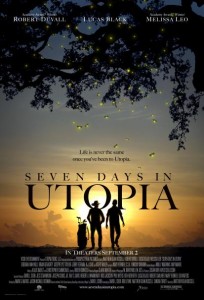
I’m really not a huge fan of golf. I tried hitting golf balls at a course close to my house as a kid, but reality (and coordination, or a lack of) caught up to me and I decided to hand in the driver. So in honesty, I wasn’t sure Seven Days in Utopia was going to be my cup of tea. Surprisingly, the film is an inspiring sports drama with two great leads. How, might you ask? Let’s delve into the plot. Lucas Black (Friday Night Lights-the movie) plays Luke Chisholm, an up-and-coming professional golfer with a shot to enter the tournament of his dreams. Unfortunately, Chisholm’s career suddenly hits a screeching halt. After a sour encounter with his father (who serves as his caddy), he botches a crucial hole and sends himself into the golf world’s headlines through a public meltdown. Soon after, Chisholm stumbles upon the small town of Utopia, Texas (by means of an automobile accident). There, he meets a man (cinema great Robert Duvall) who gives Luke a new perspective on life. Yes, I know what you’re thinking. The plot does sound a little familiar. Hot-shot rookie messes up severely, winds up in a no-name town, meets and bonds with the locals and winds up a better person. If Seven Days in Utopia had not brought its own qualities to the table, I would be quick to write the film off. I’m happy to say that the film successfully provides viewers with a refreshing experience full of heart and wisdom. Black and Duvall (already on-screen partners in the little-seen-but-very-good Get Low) have demanding presences. Black...
